Pages

Showing posts with label BQ. Show all posts

Tuesday, May 20, 2014

BQ #6: Unit U

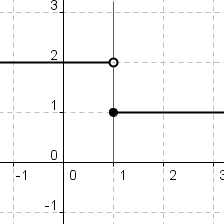
1. A continuity is a function that is very predictable because it has no breaks, no holes, and no jumps. It can be drawn without lighting up a pencil, in a single, unbroken line. A continuity is in the removable discontinuity called the point discontinuity. On the other hand, a discontinuity is has all of the opposite characteristic of the continuity. It has a break, hole, and jump. The discontinuity is put into the categories of non-removable discontinuity. Types of non removable discontinuities are jump discontinuity, oscillating behavior, and infinite discontinuity. A jump discontinuity has is different from left/right and has a break between the lines. An  oscillating behavior is wiggly while infinite discontinuity has a vertical asymptote and unbounded behavior.

Point Continuity
Oscillating Behavior
Jump Discontinuity
Infinite Discontinuity


2. A limit is the intended height of a function. It exist when there is an open hole on the graph. It is not the actual height but the intended height that it is trying to reach. The limit exist only when you reach the same height from both the left and right. A limit does not exist when there is a break in between the lines. For example in the jump discontinuity, a limit doe snot exist because it reaches two different places from left and right. A limit does not exist in the non removable discontinuities such as jump discontinuity, oscillating behavior, and infinite discontinuity. There is also a difference between the limit and value. A limit is the intended height while the value is the actual height. A value is represented by a closed circle.

Limits (intended height)


3. To evaluate the function numerically you have to set up the table and list the x value that is close to the number from left to right. You plug the equation onto the graphing calculator and trace the value. The y value will get closer and closer to the number therefore you can make ab educated guess of what the value is going to be. To evaluate it graphically you use your two finger and trace it from left to right. If the graph has a break then there is going to be a non removable type of discontinuity. To evaluate it numerically you first has to determine which kind of evaluation you're going to use. First. Start by using direct substitution. If it does not work you can determine it by using dividing out method, rationalizing, or limits at infinity

Limits Graphically
Limits Numerically


Credit/Disclaimer
Web Charter
Sage Math
All Math
Bakefield College
Khan Academy

Tuesday, April 22, 2014

BQ #4: WHy is a "normal" tangent graph uphill, ut a "normal" tangent graph downhill?

An asymptote will occur in the graph if the triq function is undefined. It is undefined when x is equal to zero. Tangent is Y/X. The tangent graph will have an asymptote at some point when x is zero. The reason why tangent graph is uphill and some are downhill is because it follows the ASTC. In a tangent graph, Q1=positive, Q2=negative, Q3=positive and Q4=negative.


 It will go up/down depending on the asymptote. Cotangent graph will have a similar graph. It will still follow the ASTC however, cotangent and tangent have a different location of asymptote. Since cotangent is x/y, the asymptote will start at a different place. Boundaries in different place will lead to the graph to be uphill/downhill.


Monday, April 21, 2014

BQ #3: How do the graphs of sine and cosine relate to eatch of the others?

Sine and Cosine relates to Tangent whenever Cosine/X is equal to zero. It happens to be where the curve on the graph is at. The curve is based on the ASTC of Tangent. Therefore, it will have different curves depending on the ASTC.


Cotangent will have an asymptote whenever sine is equal to zero. When sine is equal to zero, you will have undefined answer, therefore have an asymptote. The graph is uphill/downhill depending on where the asymptote is placed at. In this situtation, asymptote is located at 0, Pi, and 2pi.


Secant is the reciprocal of cosine. Secant will have an asymptote whenever cosine is equal to zero. The asymptote will be at pi/2, 3pi/2. On the first curve, it goes up next to the asymptote because the recicprocal of a fraction will make the number big, therefore will have to increased the curve. The curve will touch the "mountain" based on ASTC however, it will never touch the asymptote.


Cosecant will have an asymptote whenever sine is equal to zero because cosecant is the reciprocal of sine. Sine is zero at 0, pi, 2pi. The curve will depend on the ASTC of Sine. Sine is positive in qudrant 1,2. Because of that, the graph will be above the x asix. In qudrant 3,4 sine is negative. The graph will be below the x axix and will get close to the asymptote.


Friday, April 18, 2014

BQ #5: Why Do Sine and Cosine not have Asymptote, but the other four triq graphs do??

Sine and Cosine not have asymptote because it will never be undefined. The triq function of sine is y/r and cosine x/r. Since r=1, sine and cosine will be never undefined.

 As for the other triq functions, it does have an asymptote because the x, y could equal to zero. Therefore, the triq value of these functions will be undefined. Undefined triq functions will always have an asymptote on the graph.

Thursday, April 17, 2014

BQ #2: How do the Triq Graphs Relate to the United Circle?

A. Period? Why is the peirod for sine and cosine 2pi, whereas the period for tangent and cotangent is pi?

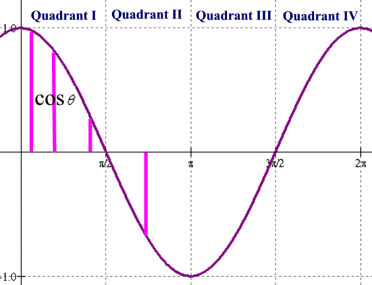
A period is the end and beginning of a cycle. It ends and starts when there is a repeating patterns. In this case. the reason why sine and cosine is 2 pi is because the pattern repeat itself fully around the Unit CIrcle. For tangent/cotangent, the pattern repeats only half way. For example in quadrant 1, tangent is positive, qudrant II negative, qudrant III positive, and quadrant IV negative. Therefore, it repeat itself only half of the graph.

Below are the sign for the triq function. The patterns can be seen by looking at the sign from Qudrant I to Qudrant IV.


The graph below also demonstrates how the triq function of sine and cosine relates to the unit circle. It marks the period of a cycle of a pattern. It would take 2pi for sine and cosine to repeat.


B. How does the fact that sine and cosine have amplitudes of one (and the other triq functions don't have amplitudes) relate to what we know about the Unit Circle?

IT relates to what we  know about the Unit Circle because sine is between 1 and -1 while cosine is between -1 and 1. Therefore, there is no restriction for the other triq function.


Sunday, March 16, 2014

BQ: Law of Sin and Area Formula

Law of Sin
To being with, we will be looking at the law of sin and how it is derived to get the actual formula. The law of sin begins with  a triangle. When it is cut through, it give us a hypotenuse.


In trigonometry, we know that sin is opposite over hypotenuse. Therefore, we know that the sin of angle A is equal to h over c. You multiply both sides by c to get h alone 


Next we must find the law of sin for angle C. Using soh-cah-toa the sin of angle C is h over a. We must isolate the h by multiplying a to get aSinC.


Finally we can use the transitive property to derived to find the real sin formula. You take the answers to both angle and set it equal to each other. Divide by ca to both side to get SinA over side a and SinC equals to side c. There, you get the toe ratio of the law of sin 


You can only use the law of sin if you have AAS(angle, angle, side), ASA(angle, side, angle), and SSA(side, side, angle).
The case when you cannot use the law of sin is when you don't know the opposite side or angle. For instance like in this picture it is given the side but the angle is missing. In addition to, the angle is also given but the opposite side is missing. 


4.Area Formula

The area of an oblique triangle is derived with a combination of the law of sin and a regular area of a triangle. You would use the same formula of 1/2 times based times height with the substitution of h. To find h, you use the law of sin, h is equal to aSinC. There, you have the devriation of the oblique triangle.  Also for it to be an a oblique triangle, all sided must be different.

There is a several different form of the area depending in the angles you are looking for.


Reference: